One Lift, Many Rules: Movement Standards in Strength Sports
By Maggie Stankiewicz, NASM-PES, USAW-L1, CF-L1
Full ROM Police are always on call. If it hasn’t happened to you, it’s happened to someone you know. You open up the comments section of any lifting PR video, and there they are. Not a single rep was completed. Drop the weight. Didn’t lock it out.
They can always be counted on to uphold esoteric movement standards from their over-optimized keyboards, inciting rage in the hearts of lifters. It’s always annoying…but are we prepared to admit that sometimes, they’re right? Hear me out.
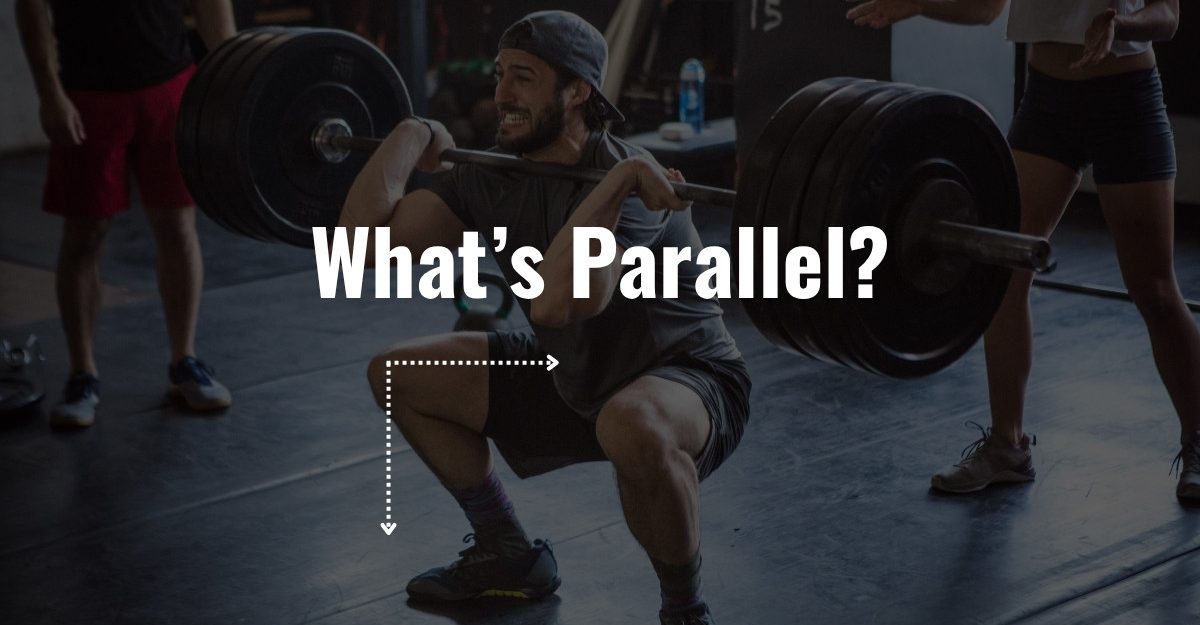
My introduction to coaching was through CrossFit, a sport with some stringent barbell movement standards compared to powerlifting and strongman, which, in the eyes of the general population, rely on looser movement guardrails on lifts like the back squat. CrossFit tests overall work capacity and full joint extension, below-parallel squat depths, and firm lockouts.
These things were drilled into me, and I drilled them into our members. My squats were always ass to grass, and if you were able-bodied, yours should be too. It wasn’t until I transitioned from coaching CrossFit to participating in the sport of strongman that my tribalistic view of movement standards began to expand.
Squat Standards Across Strength Sports
The back squat is a movement that continues to elude even me as I explore new training modalities. It’s a compound movement seen in all three sports and yields dramatically different standards in each competition environment. Whereas CrossFit is often regarded as having more lenient deadlift standards (more on that later), it has gained a reputation for having more rigid squat standards than strongman or even powerlifting.
Why might this be?
CrossFit prioritizes Olympic lift application, and a full-depth squat is the squat variation that best mimics the receiving position of a full clean or snatch. Not to mention, the stretch reflex seen in ATG squats makes rising out of the bottom of a squat more springy and, in some applications, more efficient—a priority in CrossFit-style workouts.
Powerlifting squat standards, if we’re looking at the International Powerlifting Federation (IPF), call for full control of the weight as the hip creases fall below the top of the knee, with no downward movement out of the bottom. The double bounce is illegal in competition because it often indicates momentum is driving the lift over maximal strength output.
Strongman is the wildcard when it comes to squatting. Not only are back squats less common in strongman competition; they come with a twist when they are featured. Standard barbell back squats with bumpers or calibrated plates are swapped out for heavy spectacle: varied implements like wheels and barrels that alter the ranges of motion and depths that athletes can reach. Strongman squat standards are competition- and implement-dependent, though it is often agreed upon that the hip crease should fall below the knee.
These nuances are where the Full ROM PD can flounder. A good competition strongman squat would be a no rep for CrossFitters, powerlifters, and even uninitiated lifters who learned by osmosis that a good squat is at parallel or lower.
You see, Full ROM PD are sometimes correct, but what they’re lacking is knowledge of sport specificity and programming across a broad domain. They know what an ATG squat should look like, but they don’t understand why, how, or when the nuances of movement standards, competition depths, and full range of motion intersect to create well-rounded athletes.
There is no universal movement standard across strength sports, nor should there be. This kind of standards-based tribalism is one of the primary drivers of internet discourse. Movement standards are informed by the particular test at hand—the adaptation or skill being observed. This is why none of these sports have a 1:1 ratio of common movements performed, and why a powerlifter or strongman athlete’s squat, bench, or deadlift will never look like a CrossFitter’s.
Deadlift Standards Across Strength Sports
The deadlift is the one compound movement likely to be found in all of these barbell sports. Standards and expectations for this seemingly straightforward lift vary between sports, from rep starts and finishes to what is considered appropriate lockout. The IPF allows athletes to take a sumo or conventional stance, while strongman bans sumo stance. Sumo deadlifts are not permitted under CrossFit Games standards. Neither powerlifting nor CrossFit allows an athlete to rest the bar on their thighs or leverage hip drive from that resting position, but strongman permits hitching.
Powerlifting and strongman require down commands from an official judge in competition, with the athlete demonstrating full control of the barbell back down to the platform. CrossFit, on the other hand, allows athletes to drop the bar from the top, eliminating the eccentric portion of the lift. One of the few common movement standards between all three of these sports is the lockout. All three sports require an athlete’s knees to be fully locked out, with their shoulders behind the bar.
Pressing Standards Across Strength Sports
We talked squats. We talked deadlifts. What’s left? Pressing.
Powerlifting tests maximal strength in a horizontal pressing position and never vertical. The lift calls for widespread muscle recruitment, but is paused, commanded, and an isolated test in its own right. CrossFit and strongman offer more variability in pressing strength and athleticism, with pressing performed predominantly in the vertical plane.
Strongman throws in various implements and encourages leg drive to help lift the weight into a locked-out position. CrossFit’s pressing tests are again a matter of timing and type—with strict presses, push presses, and jerk variations allowed in the context of different workouts.
Why Movement Standards Differ
CrossFit athletes can drop their bar, leverage momentum, and switch up variations used in a workout (unless a variation is explicitly prescribed) because MetCons are designed to test muscular endurance under fatigue. Stripping out the eccentric minimizes tissue damage while allowing the athlete to complete repetitions more efficiently. They can rebound out of a squat to take advantage of a fully loaded stretch reflex while adapting to the demands of Olympic lifts. They can push press for efficiency until fatigue forces them to jerk.
Powerlifting tests maximal strength and control for a singular repetition, where control and mechanical leverage are driving rep completion. The test determines who can lift the heaviest possible weight from bottom ranges into a locked-out position. It employs pauses to minimize leaning on momentum in favor of static strength.
Strongman falls somewhere in between, testing a combination of muscular endurance, power output, and static strength under heavy loads. Movement standards can vary based on the lift, the implements used, and the event type. Standards for deadlifts programmed as max-effort lifts may vary compared to standards on unconventional equipment and in the context of an AMRAP or medley. What we rarely lose is dynamic, full-body engagement in every lift.
So what’s the deal with inconsistent movement standards across strength sports? This is a question I’ve had to reconcile within myself as I transition from one sport to another. How can I be okay with a squat just to parallel instead of sinking down as low as I can go?
The answer, I’ve learned, is simple: focus on what the lift aims to test within the context of the sport.
There Is No Universal Movement Standard
So, whether you’re guilty of being one or have been personally victimized by the Full ROM PD, just remember that there’s a big gray area to navigate.
They’re right about one thing and wrong about another. Movement standards do and should exist. But there is no universal standard because there is no universal test. An all-red powerlifting rep might be the winning rep in a strongman show—and both judges are doing their job correctly.
Movement standards are not doctrine on the right way to move weight. They’re repeatable, judgeable lines drawn within the context of the sport, the event, and the test at hand.
Maggie Stankiewicz, NASM-PES, USAW-L1, CF-L1
Maggie Stankiewicz is a strength coach, writer, and competitive Strongwoman with experience in CrossFit and Olympic weightlifting. Her writing explores training, competition, and the practical realities of strength sports.